We’ve all been there—digging through our nail polish collection, spotting a favorite shade from two years ago, and wondering: is this still safe to use polish? The nail polish confusion is real, and it’s time we cleared it up once and for all.
Let’s explore everything you need to know about how long nail polish lasts, when to toss it, and how to keep your collection in flawless condition.
Key Takeaways
- Nail polish does expire – typically 12–24 months after opening.
- Signs of expired polish: thick or clumpy texture, strange smell, faded color, separation that shaking won’t fix.
- Using old polish leads to poor manicure results: chipping quickly, peeling quickly, and uneven application.
- Gel polish has higher risks – expired gel can cause permanent nail allergies.
- Store in a cool dry place, upright and tightly sealed. Roll, don’t shake.
- Never use nail polish remover to thin old polish. Use proper thinner or toss it.
1. Does Nail Polish Expire?
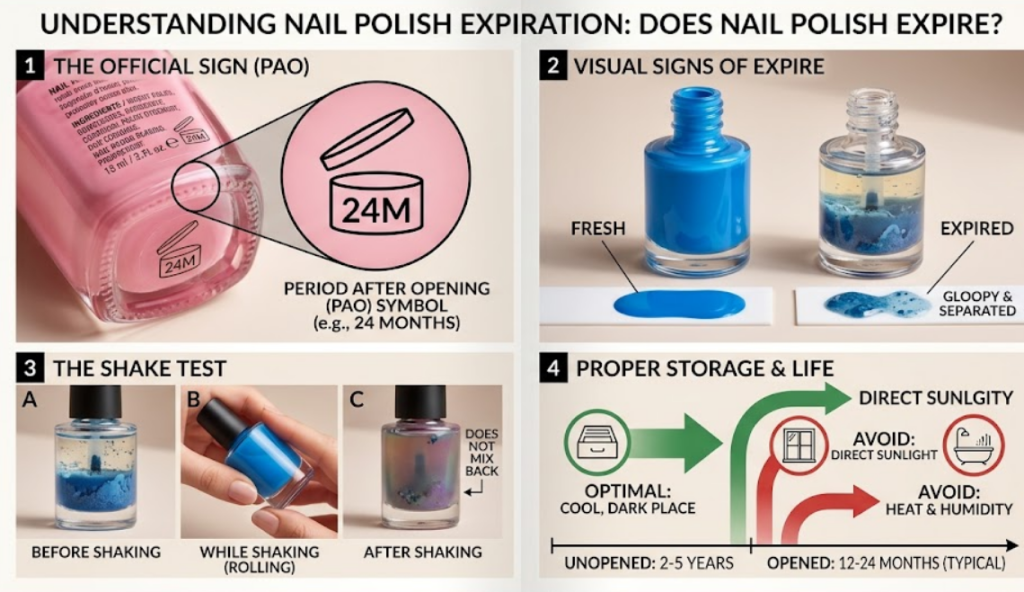
If you take good care of your nail polish, many people say it doesn’t have a strict expiration date. It might get a little thick or separate, but with shaking and some polish thinner, it can still be used.
The nail polish lifespan varies based on how well you protect it from UV exposure, temperature fluctuations, and air contact.
And On Reddit, some users mentioned that they’ve stored nail polishes that are 15 to 20 years old and are still using them. One user shared:
“I have a bottle of polish that my mom gave me 24 years ago, and I still use it!”
This shows that if nail polish is stored properly, it can last a very long time, and vintage collections can still be enjoyed.
However, if polish isn’t stored properly, the answer is simple: yes, nail polish does expire.
- Nail polish usually lasts 12–24 months after opening.
- Unopened bottles can last up to 3 years, but even sealed polish will eventually break down.
- Why? Nail polish is a complex chemical mixture—film formers, resins, solvents, and volatile compounds gradually degrade over time. Its stability isn’t permanent, and time eventually disrupts the formula.
Choosy Nail Tips:
- Let polish rest for a bit after shaking to avoid bubbles.
- Never use acetone to thin polish—it can damage it.
2. Shelf Life by Type
| Product | Opened (usable) | Unopened |
|---|---|---|
| Traditional nail polish | 12–24 months | 2–3 years |
| Professional brands (e.g., OPI) | Up to 24 months (with good storage) | Same |
| Gel polish (UV/LED) | 6–12 months | 12–24 months |
Why gel is different: Gel contains photo reactive ingredients that cure under light. As gel ages, incomplete polymerization becomes common, leaving uncured monomers on your nails. This is the main cause of nail allergies and permanent sensitization.
This YouTube video will explain nail product shelf life, helping you understand it more clearly.
3. Does Nail Polish Expire and Can Old Nail Products Cause Reactions?

This is where we need to pay close attention. Chemical breakdown in old nail products doesn’t just affect performance—it can affect your health.
As formulation integrity declines, several problems emerge:
- Solvent imbalance changes how the product adheres and dries
- Microbial contamination becomes possible (yes, bacteria and fungi can grow in old polish)
- Oxidation process alters chemical compounds, potentially creating irritants
- UV gel chemistry degrades unpredictably, leading to incomplete polymerization
The safety question isn’t just about product efficacy—it’s about avoiding sensitive skin reaction, mild irritation, or worse. While traditional polish rarely causes severe issues, expired gel polish presents real risks we’ll explore below.
Choosy Nails Tip : If you’re unsure whether your nail polish is still usable, you can ask a knowledgeable friend who understands nail products or consult a professional/expert for advice.
If you care about keeping your hands neat and polished, this complete manicure care routine guide can help you achieve that flawless look at home.
If you want salon-like results at home, these complete foot-care and pedicure techniques can upgrade your routine.
4. Signs Nail Polish Is Expired
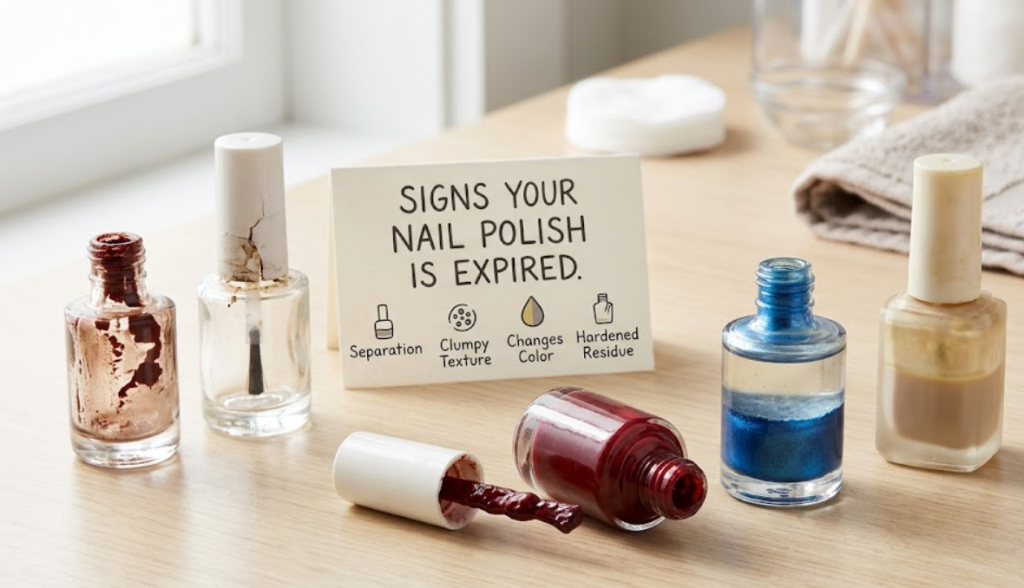
Let’s walk through the expired polish signs you need to recognize. Spotting bad polish early saves your manicure and your nails.
Thickened, Clumpy Consistency
Polish consistency thick is the most obvious sign. When viscosity increase turns your once-smooth polish into sticky polish or lumpy polish, the solvent evaporation has progressed too far. Thick nail polish causes include age, open bottle exposure, and warm storage damage.
Stringy application and hard to apply polish mean you’re fighting the product instead of working with it.
Dull or Altered Color
Faded nail color and dull polish shade signal pigment degradation. Color changing polish—like a red that turns orange or a purple that looks brown—indicates oxidation effects have altered the chemical structure of the pigments.
Seeing your favorite shade fading is disappointing, but using it guarantees a dull finish and poor application.
Separation of Ingredients
Polish separating into distinct layers is normal to some degree. But when clear liquid on top with pigments at bottom won’t remix after rolling and shaking, you’re dealing with formulation instability. Difficulty mixing polish means the suspension instability is permanent.
Strong or Unusual Smell
All nail polish has a solvent smell. But a strange smell—sharp, sour, or chemically different than usual—indicates chemical breakdown. Nail polish smell change is your nose telling you something’s wrong. Bad nail polish often announces itself through odor.
Increased Chipping and Peeling
If your usually reliable polish is chipping and peeling , don’t blame your technique first. Polish chipping easily and peeling quickly are classic expired nail polish symptoms. Adhesion failure and coating durability loss happen as the film formation capability declines.
Reduced Manicure Quality
A poor manicure result with streaky finish, uneven film distribution, and slow drying polish all point to product effectiveness loss. Application inconsistency and drying time delay make even the most skilled application look amateur.
If daily chores damage your nails, following these 7 practical nail protection techniques can help maintain strength and shine.
5. What Happens If You Use Expired Nail Polish?
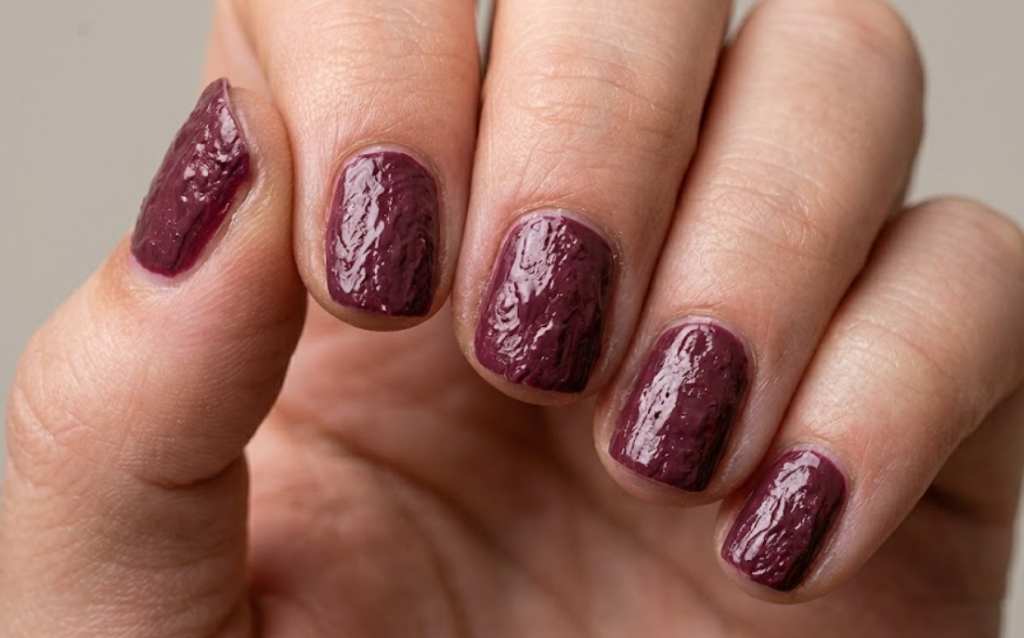
Using old nail products leads to unpredictable results and product usability decline. Here’s what you can expect.
Poor Finish and Uneven Application
Thick polish drags and streaks. Lumpy polish creates texture. Sticky polish doesn’t self-level. The result is a poor manicure that looks nothing like the smooth, glossy finish you wanted.
Reduced Durability
Even if you get it on smoothly, adhesion reduction means polish not lasting. Quick chipping and quick peeling start within a day or two instead of the week you expected.
Possible Skin Reactions or Allergies
Sensitive skin reaction to old polish can include mild irritation around the nail bed. Nail plate penetration of degraded ingredients is possible, especially with gel polish risk.
Can Expired UV Gel Polish Cause Allergies
This is critical: yes, expired UV gel polish significantly increases allergy risk.
When UV gel polish expiry occurs, the curing process becomes unreliable. Incomplete polymerization leaves uncured monomers and oligomers in contact with your skin. These acrylate allergens can trigger contact dermatitis.
Nail allergy symptoms include:
- Itchy fingers and surrounding skin
- Red skin around the nail plate
- Blisters on fingers
- Cracked skin that may bleed
- Nail lifting (onycholysis condition)
The real danger? Repeated exposure risk leads to repeated sensitization, which can cause permanent sensitization to acrylates. This means you could develop permanent allergies not just to that gel polish, but to medical adhesives, dental materials, and other acrylate-containing products you might need later in life.
Nothing here is difficult to understand—you just need a bit of common sense. With the points we’ve already covered, you’ll easily be able to figure it out yourself.
If you often deal with leftover residue, understanding effective nail glue cleaning methods can keep your nails damage-free.
6. How to Store Nail Polish for Maximum Shelf Life
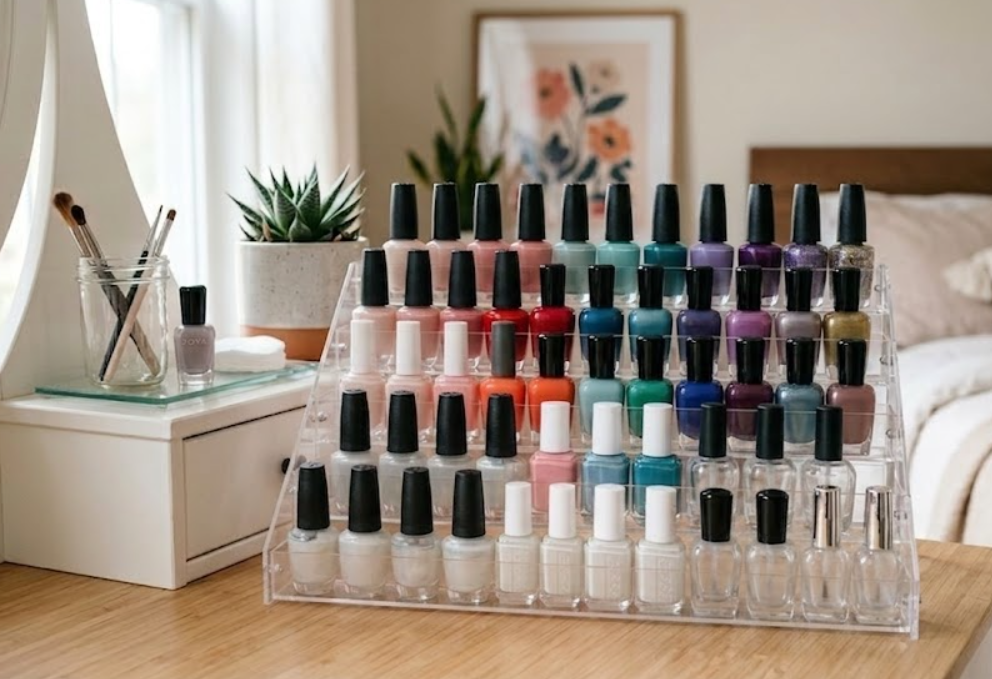
Follow these storage optimization tips to extend nail polish lifespan:
| Do | Don’t |
|---|---|
| Store upright in a cool dry place (55–70°F / 13–21°C) | Expose to sunlight damage or temperature fluctuations |
| Keep bottle tightly sealed with a clean bottle neck | Store in bathroom (humidity, heat) |
| Roll bottle between palms before use | Shake bottle (creates bubbles) |
| Consider fridge storage polish for long-term (let warm before use) | Leave open for long periods |
General tips:
- Use a nail polish organizer away from heat and light.
- Buy mini sizes for rarely-worn shades – same post opening duration, less waste.
- Mark the opening date on the bottle.
7. Does Nail Polish Have an Expiration Date on the Packaging?
Most nail polishes do not show a traditional expiration date. Look for the PAO symbol (open jar icon) with a number like “12M” or “24M”. That’s months after opening the product stays effective.
If no PAO symbol, assume 24 months from opening. Write the date on the bottle with a marker.
8. Final Recommendation:
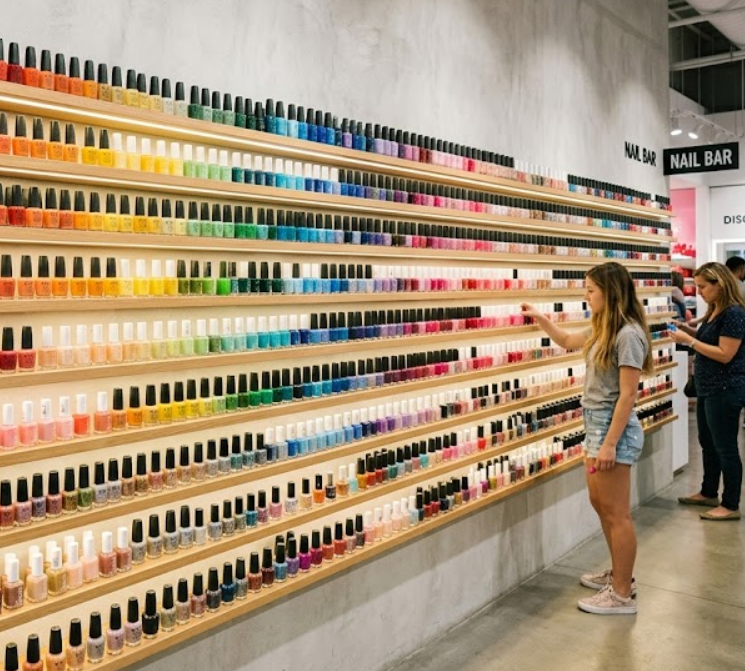
There are many nail polishes in the market that can be quite expensive, but if you feel that a polish is old, damaged, or might harm your nails, it’s better not to use it. Instead, you can choose a more affordable polish that is fresh and safe—because even a cheaper new polish will give you better results than using a bad or expired one.
If smudging ruins your manicure, trying proven quick-dry nail care hacks can make a noticeable difference.